Switch
logic.switch Logic v0.1.0 Routes input to one or more named outputs based on ordered conditions.
Finding it in the library
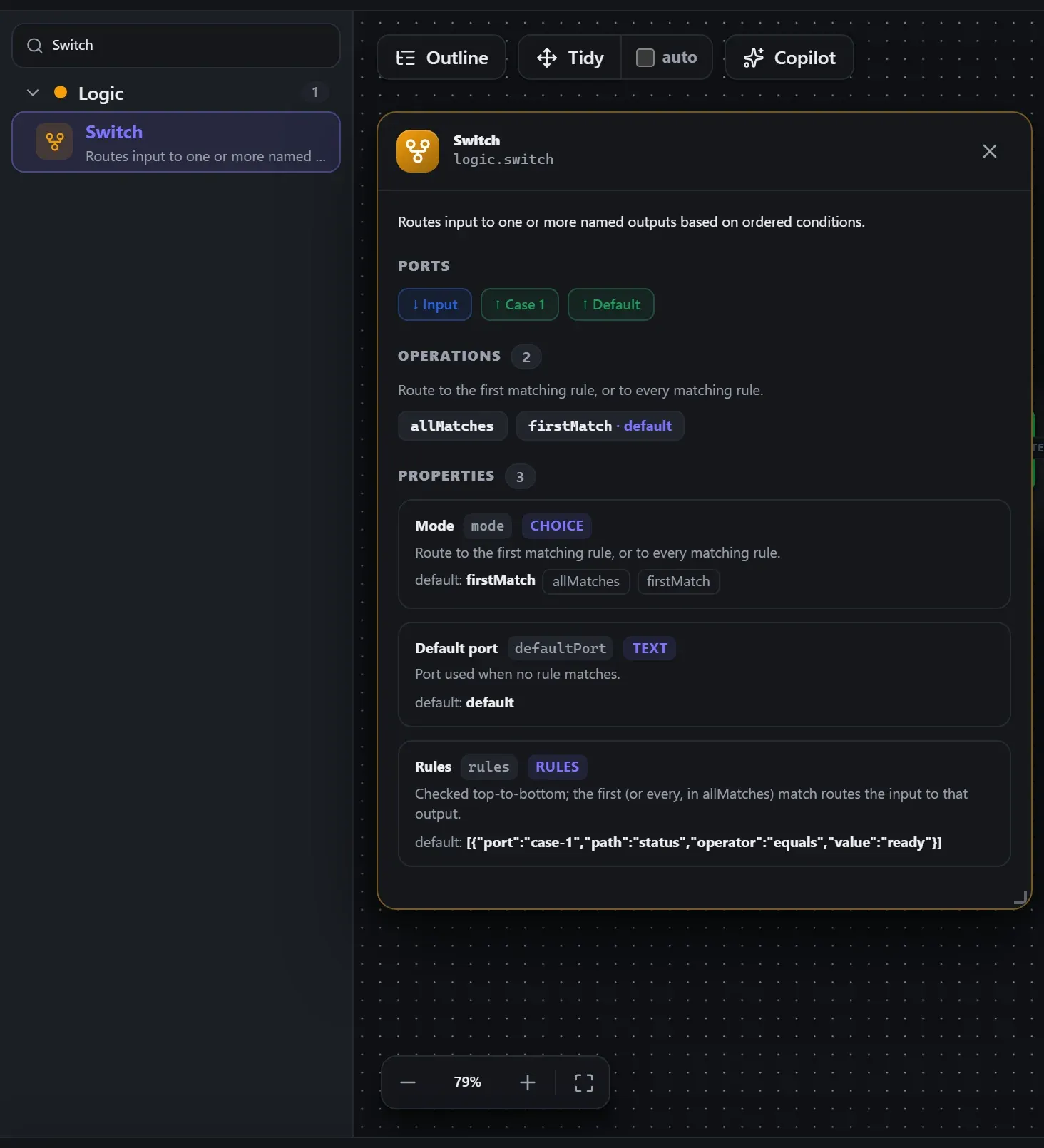
Search the builder's node library for Switch (it lives under Logic). A single click opens the in-editor docs panel shown here — description, ports, and every property, without leaving the canvas. Double-click (or drag) to add it to the workflow.
Wired up in the builder
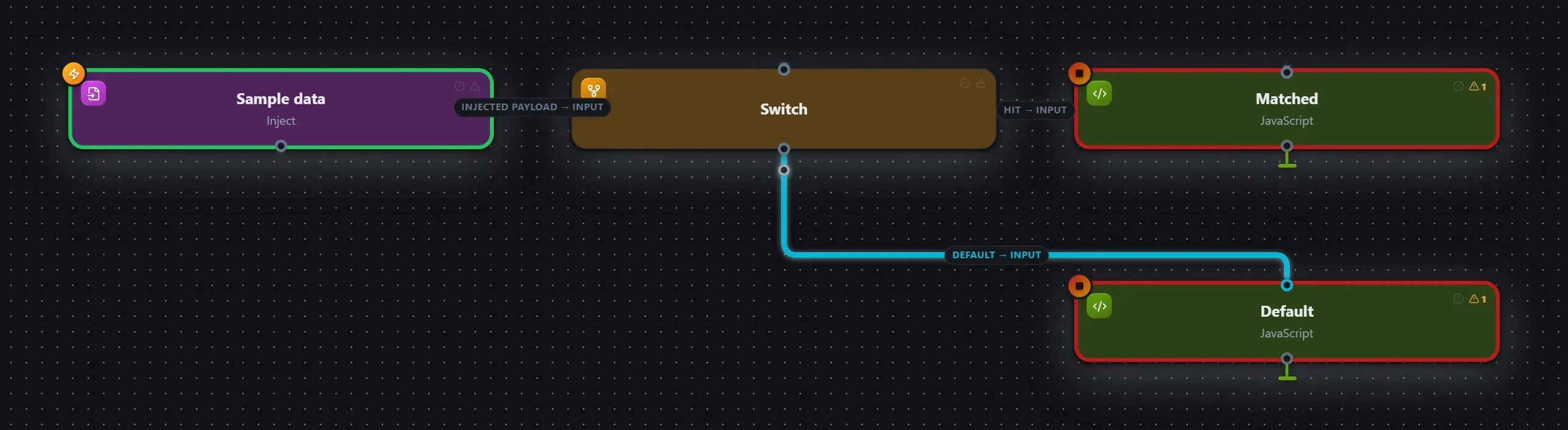
Switch in a real, runnable flow — captured live from the Studio editor, exactly as it looks on your canvas. This is the same workflow used for the example input & output below.
How it’s configured
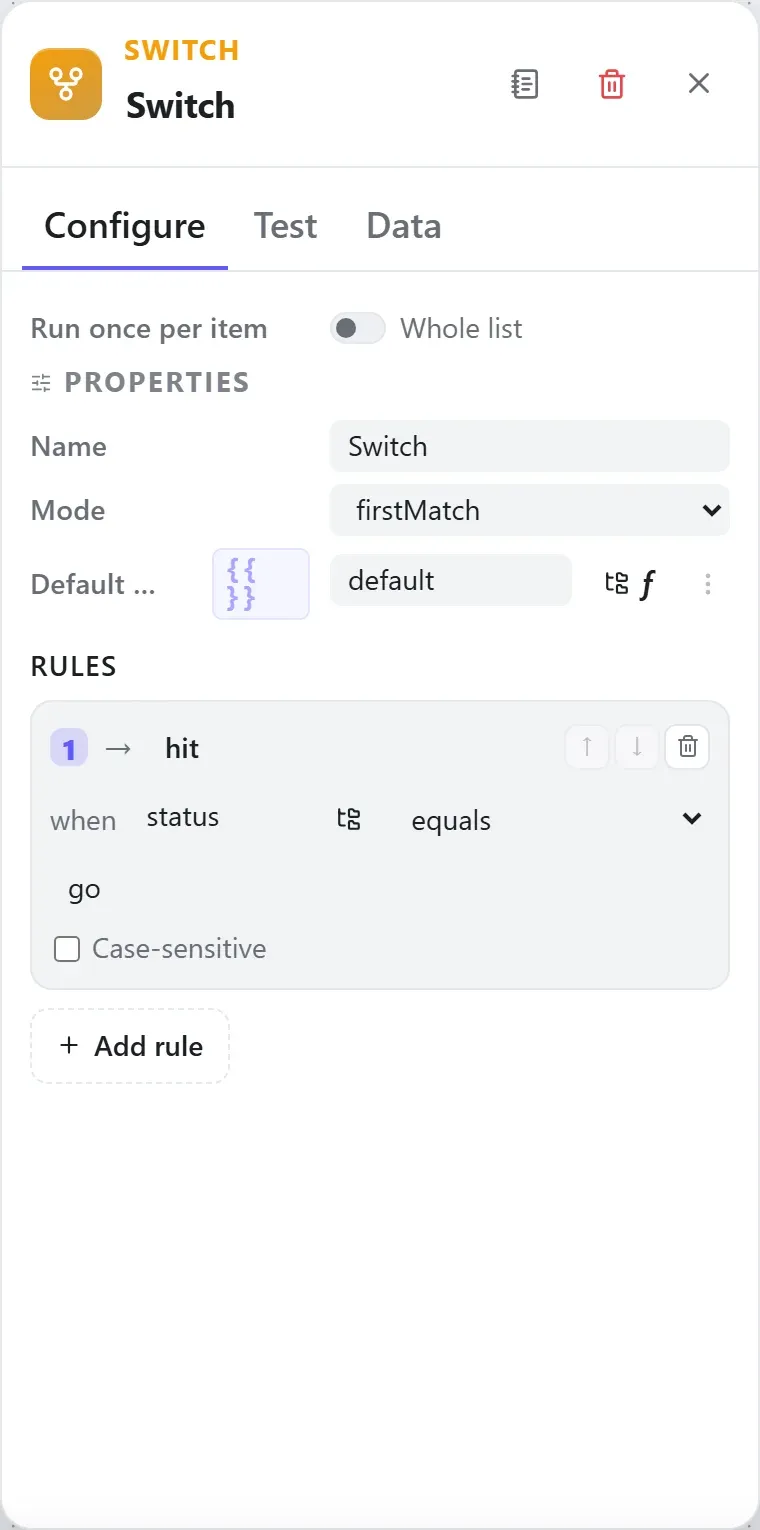
The node’s settings as the builder shows them — every field laid out with real values. In the Studio these are edited on the node: click the chevron on the divider under its ports to open them.
Ports
Ports are the node’s contract with its neighbours. In the editor a port label renders bold when wired and italic when optional; ◈ ports accept attachment carriers rather than data wires.
| Direction | Port | Label | What flows through it |
|---|---|---|---|
| Input | input | Input | |
| Output | case-1 | Case 1 | |
| Output | default | Default |
Output handles are derived from the Rules config — one handle per rule's `port` name, plus the default port.
How data flows through it
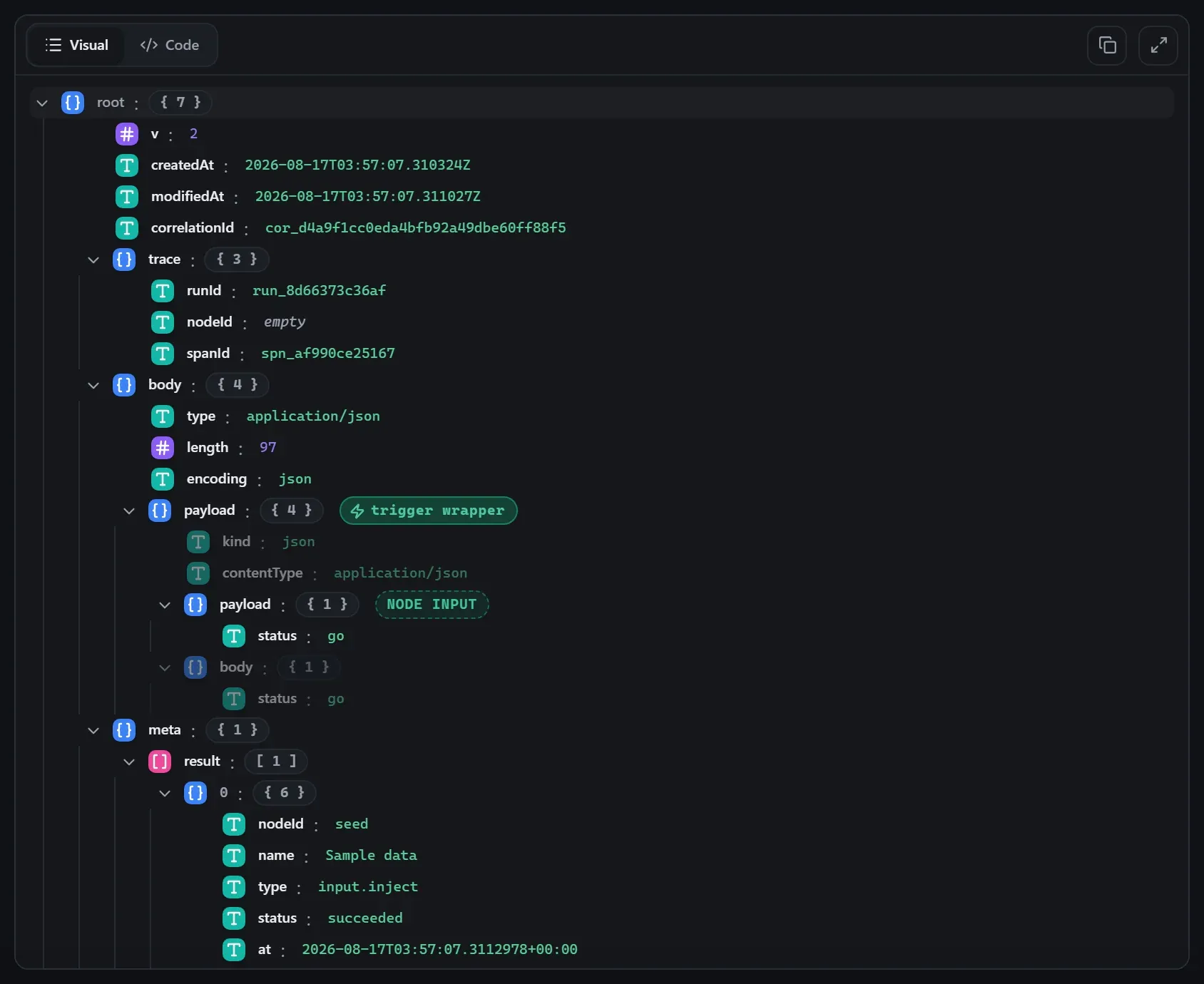
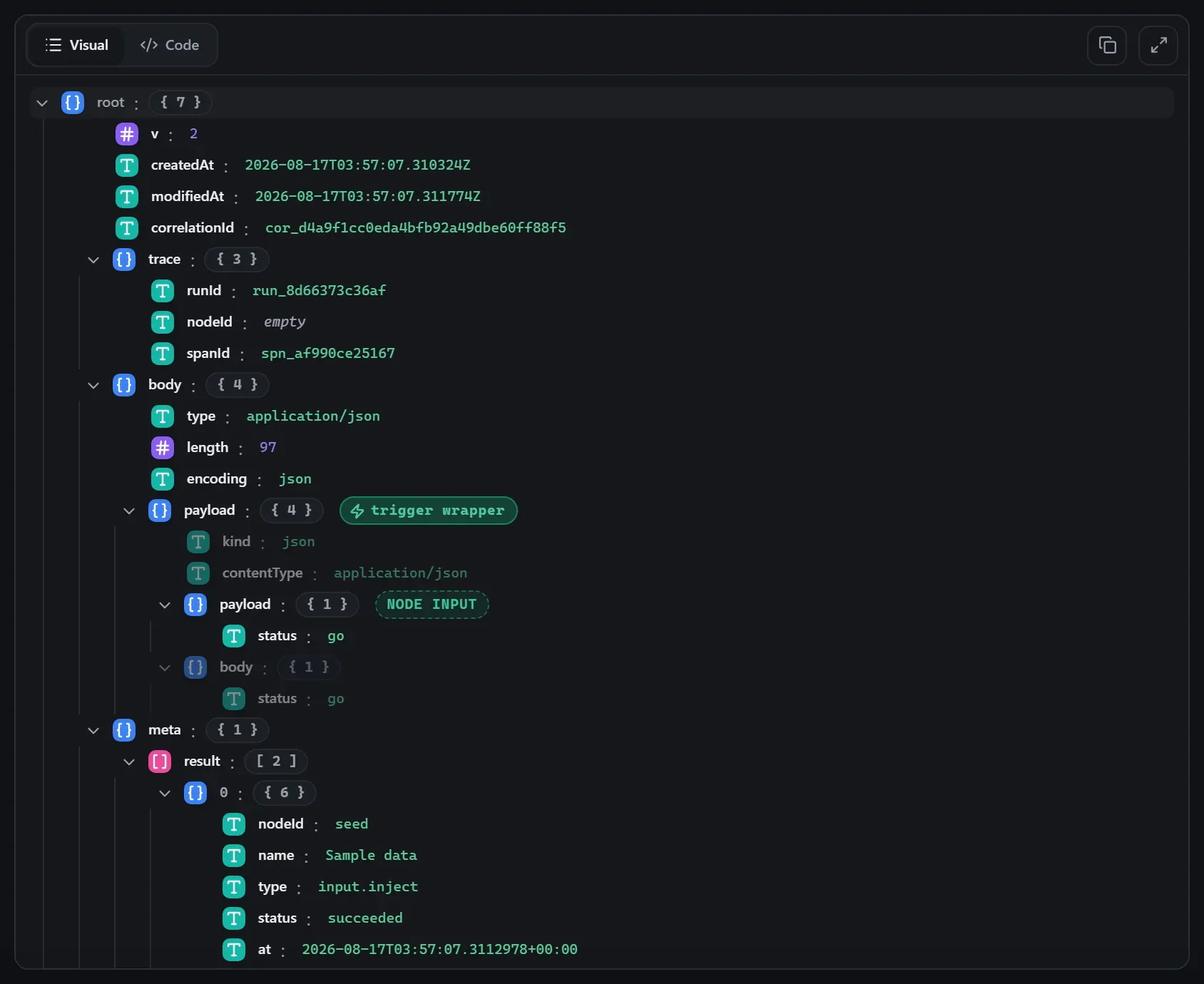
Switch consumes the content of the incoming envelope — when it is fed directly by a trigger, the trigger’s wrapper is unwrapped at the node boundary so the node sees the actual data, not the metadata shell. Its output becomes the payload for the next node, while the envelope (trace ids, correlation, binary refs) rides along untouched. In the Runs view you always see the whole envelope for both sides of this node.
Expressions in the config
String-typed properties accept {{ }} expressions evaluated against the
incoming item at run time — e.g. {{ $json.customer.email }}. On this node
that’s defaultPort. JSON- and code-typed fields never interpolate — they are passed through literally.
Build it with AI
Every node in this reference is reachable through Flowdrome’s
AI Copilot and the
MCP tools — say what you want, and the graph surgery
happens server-side. Node types resolve fuzzily, so the catalog label
(Switch) works as well as the exact type id (logic.switch).
In the Copilot panel (or any connected AI):
add a switch node after the triggerAs a step in a create_chain_workflow call:
{"type":"Switch","config":{}}Raw MCP call — add this node to a workflow with add_node
curl -s -X POST http://localhost:4800/mcp -H "content-type: application/json" -d '{ "jsonrpc": "2.0", "id": "1", "method": "tools/call", "params": { "name": "add_node", "arguments": { "workflowId": "<id>", "type": "Switch" } } }'Example input & output
Captured from a real test run of the workflow above — this is what the Runs view shows after pressing Test workflow.
On this run the node emitted on port hit.
Input — what the node received
body.Output — what the node produced
Property reference
Every setting, with its type and default — the same fields shown configured above.
| Property | Type | Default | Description |
|---|---|---|---|
Modemode | select | "firstMatch" | Route to the first matching rule, or to every matching rule. allMatchesfirstMatch |
Default portdefaultPort | string | "default" | Port used when no rule matches. |
Rulesrules | switch-rules | [{"port":"case-1","path":"status","operator":"equals","value":"ready"}] | Checked top-to-bottom; the first (or every, in allMatches) match routes the input to that output. |
Related nodes
The rest of the Logic group — the same folder you’d scan in the editor’s library.
This page is generated from the node registry by gen-node-docs.mjs on every
site build — ports, properties, defaults and visibility rules cannot drift from the code.
The screenshots and example data are captured from a live Flowdrome by
npm run shots:nodes and npm run gen:examples.